Smart Curtain Motors: Working Principle, Key Specs, and Sourcing Tips
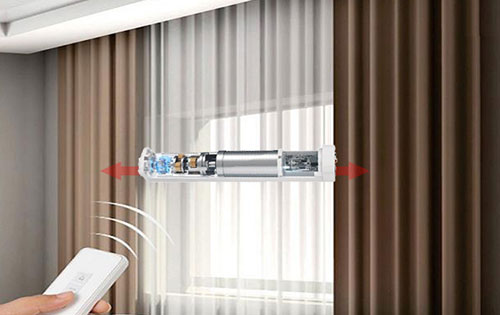
Smart curtain motors automate the opening and closing of curtains, so users no longer need to pull them by hand. As building automation accelerates across smart homes, modern offices, and the hospitality sector, the demand for reliable, customizable motors for curtains is growing rapidly. This article gives engineers, product managers, and procurement professionals a complete technical and sourcing reference.
How Do Smart Curtain Motors Work?
Key Components and Working Principle of Motorized Curtains
A motorized curtain system is built around three interdependent components: the drive motor, the mechanical track, and the control module.
1. Smart Curtain Motor
The drive motor turns a gear set at the end of the track that drives a high-strength internal belt or pulley, smoothly pulling the master carrier and the entire curtain panel along the rail. The two most common motor types are low-voltage DC (or BLDC) motors and AC asynchronous motors, each suited to different load and installation requirements.
2. Mechanical Track
The mechanical track is not purely passive — its internal tolerance and material quality directly affect how much friction the motor must overcome, making track selection inseparable from motor sizing.
3. Control Module
The control module is the system brain. It receives commands via RF (433 MHz), Wi-Fi, Zigbee, Bluetooth, or the emerging Matter protocol, and translates those signals into precise motor commands — open, close, or stop at a defined position such as 50% open.
Important Considerations for Curtain Motors
For engineers and product managers, three performance factors are critical:
1. Noise Control (NVH)
Noise control is paramount, especially for residential and hospitality applications. Brushless DC (BLDC) motors paired with optimized gear reduction typically operate between 25–35 dB — comparable to a quiet library. Soft-start and soft-stop algorithms prevent audible collision sounds at track limits.
2. Torque Management
Torque management must be precisely matched to the curtain weight and track friction. Mismatched torque causes either motor overload and stalling or abrupt, damaging pulls. Advanced smart curtain motors incorporate torque-limiting sensors that detect resistance in real time and reduce speed or stop automatically to protect both the motor and the fabric.
3. Power Efficiency
Power efficiency determines heat output, lifespan, and battery viability. BLDC motors can convert 85–90%+ of input power into mechanical output, a decisive advantage over conventional AC motors in battery-powered or solar wireless installations.
Application Example: A low-torque motor (1.0–3.0 Nm) is suitable for light- to medium-weight residential curtains. Conversely, a high-torque motor (3.0 Nm+) is required for commercial settings (hotels/offices) where heavy blackout drapes or long tracks impose higher frictional loads.
Key Specs of Smart Curtain Motors
Understanding the full specification profile is essential before committing to a motor design or supplier.
1. Rated Torque
Rated torque defines the maximum rotational force the motor can reliably deliver. Residential smart curtain motors typically range from 1.0 to 3.0 Nm (common ratings: 1.2 Nm, 1.5 Nm, 2.0 Nm). Commercial or heavy-duty curtain motors are often rated between 3.0 and 10.0 Nm or higher.
2. Load Capacity
Directly correlates to torque. Ensure the motor supports the curtain weight (usually 15kg to 30kg). For example, a motor rated at 1.2 Nm typically carries up to 50kg, while a 2.0 Nm BLDC motor often handles heavier loads.
3. Operating Noise
Noise level is a defining quality marker. Premium BLDC motors achieve 25–35 dB during operation, with some ultra-quiet models rated as low as 18.9 dB. Standard or entry-level AC motors typically fall in the 40–55 dB range, practical for applications like oversized stage curtains and large blackout curtains used in healthcare facilities.
4. Power Supply Requirements
Rated voltage reflects installation context. DC 12V, 24V, and 36V variants dominate the smart home segment due to their efficiency, safety, and ease of integration with smart controllers. AC 110V or 220–240V motors connect directly to building power infrastructure, offering higher sustained output for heavy commercial loads.
5. Control Methods
Modern curtain motors typically integrate multiple protocols simultaneously to meet the control needs of different scenarios.
l RF 433MHz: Reliable for remote controls (even without Wi-Fi).
l Wi-Fi/Zigbee/Bluetooth: For app control and smart home ecosystem integration (like Alexa and Google Home).
l RS-485/Dry Contact: Essential for commercial BMS integration.
6. Durability & Certifications
Lifetime test standards and certifications establish durability and market compliance baselines. Quality DC curtain motors are typically designed for 50,000–80,000 open/close cycles, with factory endurance testing typically requiring no-fault operation for thousands of cycles under rated load.
Key certifications include CE (mandatory for Europe, covering LVD, EMC, and RED directives), RoHS (restriction of hazardous substances — lead, mercury, cadmium), FCC (required for all RF-enabled motors sold in the US), and UL/CSA for commercial-grade AC motor installations in North America.
Smart Curtain Motor Sourcing Tips
After defining the technical requirements, the focus shifts to motor sourcing and supplier selection. This decision requires balancing cost, engineering support, and supply chain reliability. Here are the key factors to evaluate.
Quality Control Checkpoints
1. Motor Testing
The motor’s core mechanical and electrical performance must be thoroughly assessed. Key evaluation steps include static and dynamic testing, insulation resistance measurement, and dielectric strength verification to ensure electrical safety. EMC and NVH testing should also be performed to guarantee stable operation and a quiet user experience.
2. Load Testing
Load testing verifies pulling capability across varying curtain weights and fabric types. Peak torque endurance and high-acceleration ramp tests should confirm stable operation at or near maximum rated load (50 kg, 60 kg, or 100 kg) without gear wear or thermal shutdown.
3. Endurance Cycle Testing
Endurance cycle testing is the definitive lifespan evaluation. Compliant motors should demonstrate a minimum of 10,000–20,000 fault-free cycles under rated conditions, while best-in-class products target 50,000–80,000 cycles or more.
Curtain Motor Supplier Selection Factors
When evaluating a potential OEM/ODM partner for curtain motors, five factors separate reliable suppliers from risky ones.
1. Component Reliability
Component reliability is reflected in the quality of bearings, housing materials, and internal gear sets, as well as the certifications held. Look for suppliers with verifiable CE, RoHS, FCC, and UL/ETL credentials relevant to your target market.
2. OEM/ODM Customization Capability
OEM/ODM customization capability is non-negotiable for product differentiation. A capable partner should be able to adjust torque output and motor speed, integrate specific smart home protocols, customize track compatibility, and deliver private-label branding and packaging — not simply modify existing stock.
3. MOQ Flexibility
MOQ flexibility matters significantly at the product development stage. Suppliers that support sample orders of a single unit and pilot batches of 50–200 units allow brands to validate performance and market fit before scaling, reducing upfront capital risk substantially.
4. Lead Time
Lead time should be evaluated against your product roadmap. Standard small-batch or sample orders typically ship within 7–15 days; large-volume or fully customized orders generally require 25–30+ days. Confirm both production capacity and on-time delivery history.
5. After-Sale Support
After-sale support is often underweighted in procurement decisions. Suppliers offering 3–7-year warranty coverage, multilingual technical teams, and fast-response troubleshooting meaningfully reduce your post-launch support burden.
Power Motor: Your Reliable Smart Curtain Motor Manufacturer
Power Motor has rich expertise in supplying motion solutions across smart home, home appliances, medical devices, and industrial automation.
For curtain-specific applications, we offer electric curtain motor solutions that feature compact dimensions, high torque (rated at 1.3–1.5 N·m), and low noise, with a rated voltage of 100–240V AC / 50–60 Hz and a rated speed of 12–14 cm/s. Motor parameters, control methods, and receiver systems can all be customized to match customer requirements.
For heavy-load applications such as roller shutters or lifting curtains, Power Motor's high-voltage DC gearbox motor solution uses 220VAC full-wave rectification to power a DC motor — delivering the energy efficiency and low temperature rise of low-voltage DC technology without an external transformer. The result is a motor capable of driving curtain loads of 40–100 kg with accurate positioning and a service life exceeding 200,000 lifting cycles, with operating noise below 45 dB.
We are also advancing next-generation BLDC motor technology for curtain systems, targeting lower energy consumption, extended lifespan, and a quieter user experience compared to conventional brushed or AC motor designs.
If you are looking for professional smart curtain motor solutions or other smart appliance motors, such as smart toilet motors and electric desk motors, our OEM/ODM services are designed to help equipment manufacturers develop differentiated product lines. For more information, contact our professional team!