Custom Automotive Motor Development Process: A Complete Step-by-Step Guide
Modern vehicles rely on small yet powerful actuator motors to execute dozens of functions every day. Unlike traction or powertrain motors, these specialized automotive motors convert electrical signals into precise mechanical movements — enabling power tailgates, seat adjustments, door locks, and more. This guide walks through each critical stage of the custom actuator motor development process.
What Are Automotive Actuator Motors?
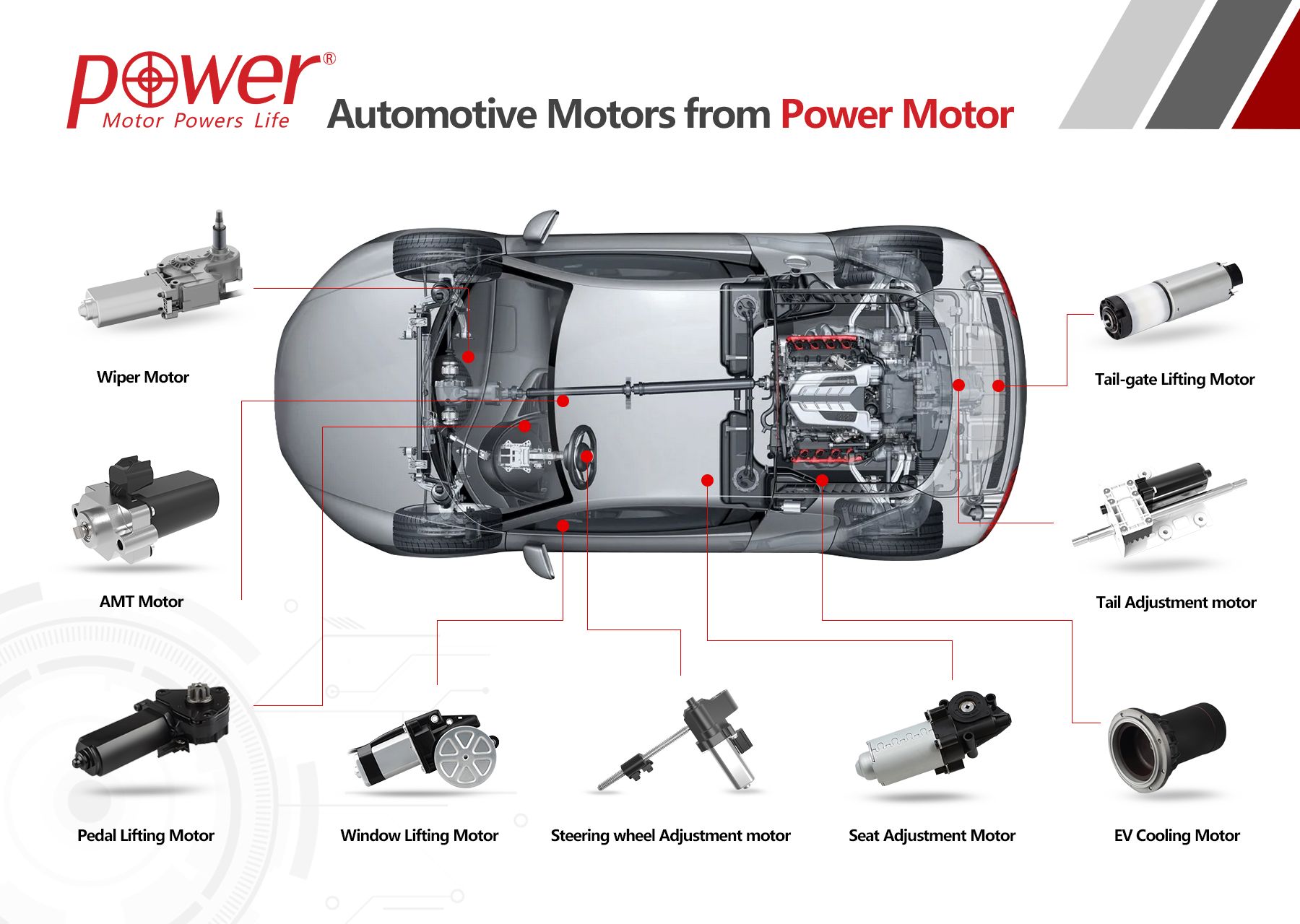
Automotive actuator motors are compact electric motors designed to translate electronic commands into controlled physical action. They serve as the operational backbone of a vehicle's comfort, convenience, and safety systems. Common applications include:
l Tailgate lifts — raising and lowering power liftgate doors on SUVs and MPVs
l Electric seat adjustment — enabling multi-directional seat positioning for driver and passenger comfort
l Mirror folding and angle adjustment — automating side mirror movement for parking and visibility
l Door locks — providing fast, reliable locking and unlocking actuation
l Sunroof control — managing open/close and tilt functions
l HVAC flaps — regulating airflow direction and temperature distribution
Each of these applications demands a unique combination of torque output, operating speed, form factor, and acoustic performance. A power liftgate motor, for example, must generate high torque within a compact tubular housing integrated with a planetary gearbox, while a seat adjustment motor prioritizes whisper-quiet operation and smooth responsiveness. This diversity of requirements is precisely why customization is not optional — it is fundamental to reliable automotive motor design.
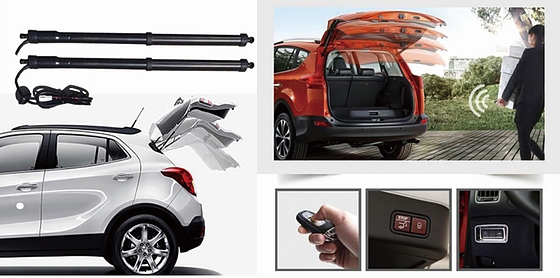
Picture shown: How the powered tailgate motor works
Custom Automotive Motor Development Process
Step 1: Defining Requirements and Applications
Every successful custom automotive motor begins with a thorough analysis of the target application and its operating environment. Engineers define key parameters before any design work begins:
l Load conditions: the forces and resistances the motor must overcome
l Duty cycle: the ratio of operating time to rest time
l Operating temperature range: typically -40°C to +85°C for automotive-grade parts
l Ingress protection: waterproofing and dust resistance, expressed as an IP rating
l Service life: expected cycles or years of operation under real-world conditions
Consider two contrasting examples:
1.A power liftgate motor must reliably lift a heavy tailgate door thousands of times, demanding high torque and robust durability.
2. A seat adjustment motor must operate quietly and smoothly, as noise directly impacts passenger experience.
Early collaboration between OEMs, system engineers, and motor suppliers is critical — aligning on packaging constraints, voltage requirements, and performance targets from the outset avoids costly redesigns.
Step 2: Design Concept and Motor Selection
With requirements defined, engineers evaluate which motor architecture best fits the application. The three primary types used in automotive actuator systems each carry distinct trade-offs:
Motor Type | Cost | Efficiency & Lifespan | Noise Level | Best For |
Brushed DC | Low | Moderate (brush wear over time) | Higher (brush friction) | Simple, intermittent-use actuators (windows, basic seat adjustment) |
Automotive BLDC Motor | Higher | Excellent (long service life) | Low (quiet operation) | High-load, frequent-use, or noise-sensitive systems (liftgates, HVAC, premium seats) |
Stepper Motor | Medium | High | Moderate | Precision positioning without feedback (adaptive headlights, HVAC dampers) |
The growing adoption of automotive BLDC motors reflects a broader industry trend toward electrification and higher performance standards. BLDC motors offer lower noise and greater efficiency at equivalent power levels compared to brushed alternatives — advantages that matter greatly in premium vehicle segments where NVH (noise, vibration, and harshness) targets are increasingly stringent.
Once a motor type is selected, engineers use CAD modeling and electromagnetic finite element analysis (FEA) to simulate torque-speed characteristics, magnetic flux distribution, and thermal behavior — all without cutting a single physical part. OEM technical standards and compliance requirements are also mapped at this stage to ensure that safety and certification pathways are built into the design from day one.
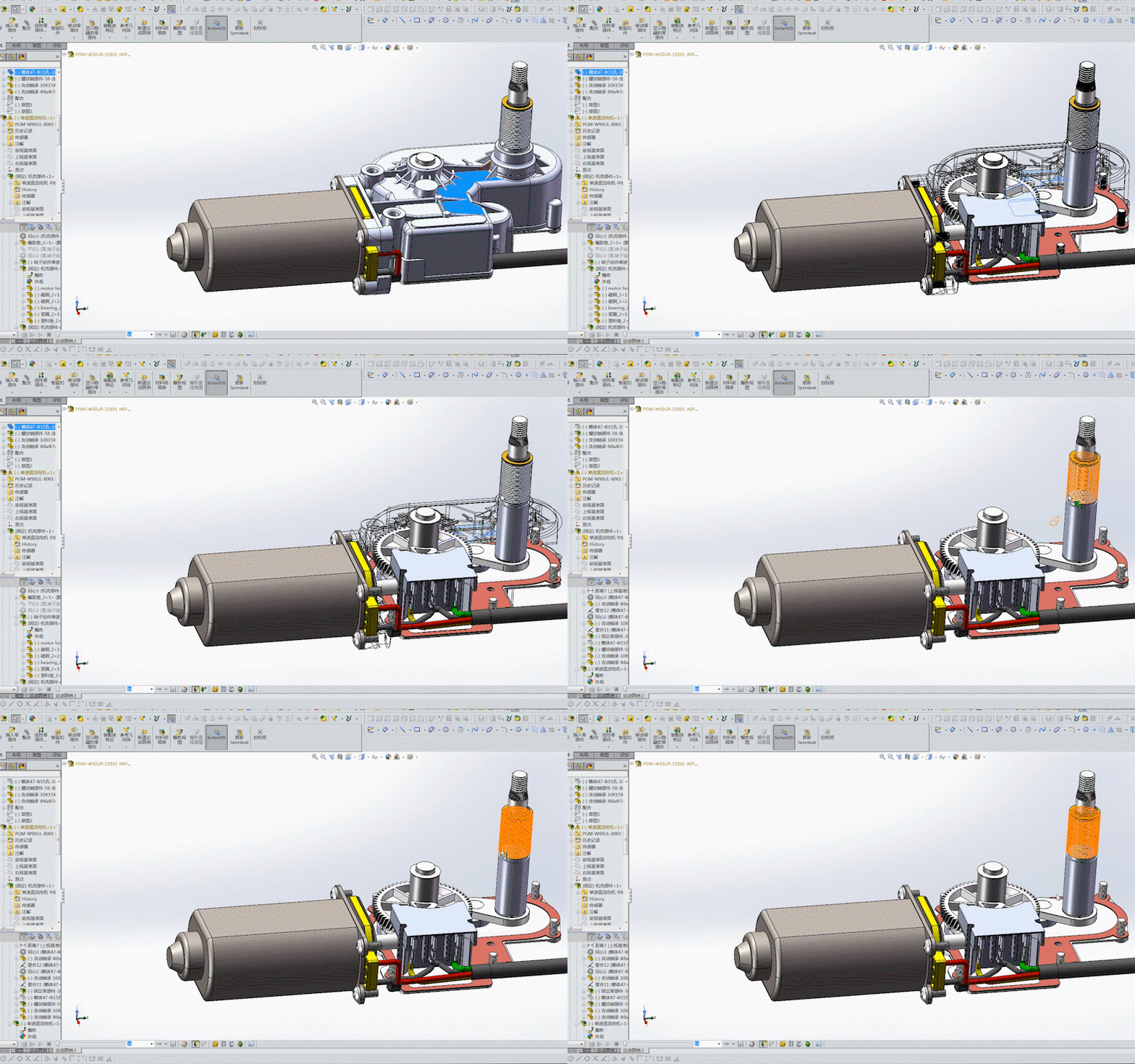
Picture shown: PMDC motor platform
Step 3: Prototyping and Simulation
With a validated design concept, the team moves into physical and virtual prototyping:
l Rapid prototyping: 3D-printed housings, prototype stator and rotor assemblies, and bench-test samples allow engineers to evaluate mechanical fit and early performance
l Virtual validation: multi-physics simulations model thermal rise in windings, vibration response, and electromagnetic behavior under extreme conditions
l Bench testing: early measurements confirm load response, noise levels, and speed-torque curves against specification
When results fall short — whether in torque, acoustics, or thermal endurance — a feedback loop triggers iteration. Engineers refine the electromagnetic geometry, winding layout, or gearbox ratio and validate again before committing to production tooling.
Step 4: Testing and Validation
Automotive-grade motors face demanding real-world conditions. A comprehensive validation program typically includes:
l Torque and speed verification across the full operating voltage range
l High-temperature endurance — sustained operation and storage at elevated temperatures
l Vibration and mechanical shock testing — simulating road-induced stress over thousands of hours
l Ingress protection testing — confirming ratings such as IP67 (dust-tight and water-immersion resistant)
l NVH acoustic analysis — measuring sound pressure levels against interior cabin noise targets
l Life cycle testing — a sunroof motor, for example, may undergo tens of thousands of open/close cycles across a -40°C to +85°C temperature swing
Compliance with IATF 16949 and ISO 26262 (functional safety) is a prerequisite for automotive supply chain approval. Rigorous documentation throughout validation supports these certifications and protects both the supplier and the vehicle manufacturer.
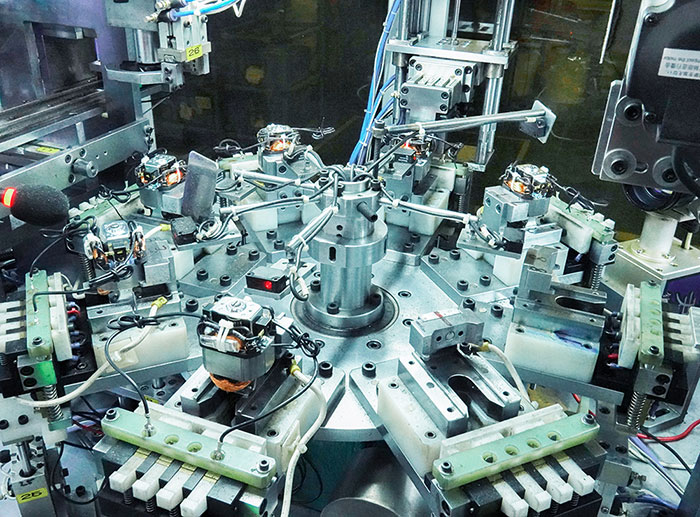
Step 5: Manufacturing and Quality Control
Transitioning from a validated prototype to consistent mass production requires investment in tooling, process validation, and automation. Key manufacturing considerations include:
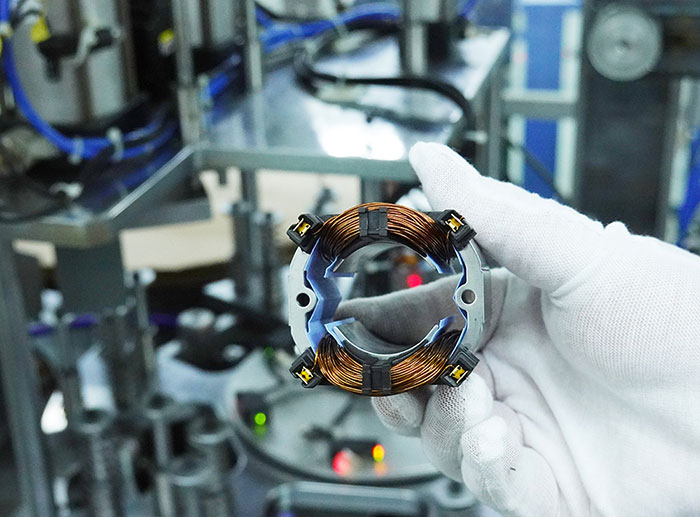
l Winding quality: consistent slot fill rates and insulation integrity directly affect motor efficiency and longevity
l Magnet placement precision: minor deviations in permanent magnet positioning can alter torque output and introduce vibration
l Assembly accuracy: tight tolerances in bearing fits and shaft alignment ensure repeatable performance
Every unit undergoes 100% end-of-line (EOL) testing — automated systems verify electrical safety, speed, torque, and acoustic emission before shipment. Component traceability via barcoding or RFID, combined with statistical process control (SPC), keeps process variation in check at production scale.
Step 6: Integration and Final Verification
The final stage involves integrating the motor into the complete actuator assembly and validating performance within the actual vehicle. For smart actuators communicating over CAN or LIN bus networks, hardware-in-the-loop (HIL) testing verifies that motor drive control, position feedback, and software calibration interact correctly with the vehicle's ECU.
On-vehicle validation covers real-world edge cases that lab testing cannot replicate. A door lock motor, for instance, must actuate reliably under low-voltage winter conditions while meeting anti-pinch safety requirements in high-humidity environments. Only after passing this final layer is the motor approved for production installation.
Power Motor: Your Experienced Partner for Custom Automotive Motors
For OEM engineers and procurement teams seeking a proven partner in custom automotive motor development, Power Motor brings over two decades of focused expertise. Founded in 2001 and recognized by the China Association of Automobile Manufacturers as a top-ten motor enterprise, Power Motor delivers precision actuator motors that meet the most demanding vehicle-grade requirements.
Power Motor's automotive portfolio spans electric seat adjustment motors, power liftgate motors, window lift motors, wiper motors, and more. In seat adjustment alone, we have developed more than 43 distinct motor models, covering horizontal, angular, and full-seat lift configurations. Additionally, our power liftgate motor (Model PGM.P029 series — 12V DC, 100W, 180 RPM, 2.2 N·m torque) delivers the high torque and low-noise operation required for premium SUV and MPV applications.
What sets Power Motor apart is our depth of customization. With a modular design system offering over one million potential configurations, our engineers work closely with OEM clients to specify the exact reduction ratio, encoder type, matching controller, and mechanical interface for each application.
Whether you are developing the next generation of automotive DC motor solutions for comfort systems or evaluating automotive BLDC motor options for electrified platforms, Power Motor has the engineering depth, production scale, and application experience to support your program from specification through mass production.
If you need any support, feel free to contact our professional team!