
When selecting a motor for demanding applications, voltage selection is a primary factor. To optimize performance, engineers must balance power supply constraints with efficiency requirements when integrating high-torque electric motors.
Whether you are designing for automotive comfort or industrial automation, understanding how 12V, 24V, and 36V configurations affect your system is essential for ensuring product longevity and operational reliability.

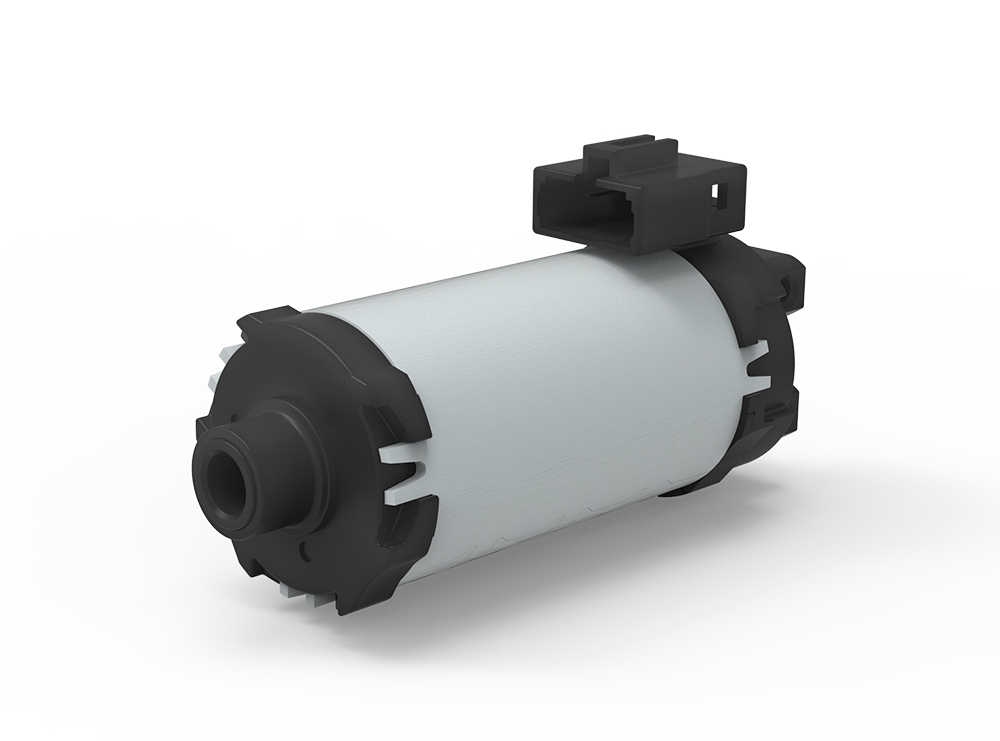
Picture shown: 12V Power Seat Adjustment Motor
In motion control, voltage is often misunderstood as the sole indicator of a motor's "strength." Technically, voltage represents the electrical potential or the "pressure" that drives current through the system. For a high-torque DC electric motor, the relationship between voltage (V), current (I), and power (P) is defined by the formula P = V × I.
A common misconception is that higher voltage automatically equals higher torque. In reality, torque is primarily a function of current and the physical design of the motor—such as the number of windings, the strength of the magnets, and the rotor architecture.
However, voltage plays a critical role in how that torque is delivered. Higher voltage allows a motor to maintain its torque at higher speeds by overcoming "back EMF" (electromotive force).
Furthermore, increasing the voltage allows the system to achieve the same power output with less current. This is vital because heat generation is proportional to the square of the current (Ploss = I2R). By opting for a higher voltage, you can significantly reduce thermal stress on the components.
Choosing the right voltage depends heavily on the scale of your application and the environment in which the motor will operate.
12V motors are the industry standard for small, portable, or battery-operated devices. They are highly favored in automotive components and for mobile medical devices due to their safety and compatibility with standard lead-acid or small lithium-ion batteries.
l Advantages: High safety profile, easy to power with a single battery, and cost-effective for low-power applications.
l Drawbacks: To produce high power, these motors require significant current, which necessitates thicker wiring and can lead to rapid heat buildup in heavy-duty cycles.
The 24V system is widely adopted for many industrial automation and smart home applications. It offers a superior balance between performance and cost.
l Advantages: Compared to 12V systems, a 24V high-torque DC electric motor can output more power while drawing half the current. This results in higher efficiency, lower operating temperatures, and the ability to use thinner, more flexible wiring.
l Drawbacks: Requires a more robust power supply or dual-battery configurations, slightly increasing the initial setup footprint.

Picture shown: 24V Electric Massage Chair Brushless Motor
For applications requiring sustained high output, such as warehouse robotics or electric mobility, 36V systems are often preferred.
l Advantages: These systems excel in efficiency. They can handle significant loads and steeper gradients with minimal resistive losses. They are ideal for high-duty cycle environments where thermal management is a priority.
l Drawbacks: The battery management systems (BMS) and controllers are more complex and expensive.
When your application requires a low-speed, high-torque electric motor, the following factors must be evaluated beyond just the voltage number:
1. Power Source Configuration: Ensure your battery or AC-DC converter can handle the peak current surges during startup. High-torque starts often draw several times the rated current.
2. Wiring Size: Low-voltage, high-current systems (12V) require larger gauge wires (lower AWG) to prevent voltage drops and fire hazards. High-voltage systems (36V) allow for sleeker cable management.
3. Thermal Management: Consider the duty cycle. If a motor runs continuously, the heat dissipation of a 24V or 36V system is generally easier to manage than a 12V system pushed to its limits.
4. Controller Compatibility: High-torque applications require sophisticated motor drivers capable of pulse-width modulation (PWM) and current sensing to prevent stalling and over-current damage.
At Power Motor, we have decades of experience in manufacturing customized high-torque motors across various voltage ranges. We focus on maximizing torque density while maintaining a compact form factor and low noise profile to meet the rigorous demands of our global clients.
Some of our high-torque models include:
l 12V Power Seat Adjustment Motor: Designed for the automotive sector, this motor delivers high torque and long life in a compact 45 mm diameter housing. Its low-noise operation makes it ideal for premium vehicle interiors.
l 24V BLDC Motors for Smart Door Systems: These brushless motors provide the reliability needed for high-traffic automated doors. They feature high torque and low cogging for smooth, silent movement.
l 24V Electric Massage Chair Brushless Motor: A high-efficiency solution that offers exceptional torque-to-weight ratios, ensuring long-term durability in consumer wellness products.
l 36V Direct Drive BLDC Motor: For applications requiring the highest efficiency and precision, this 36V variant minimizes mechanical losses and provides stable performance for industrial automation.
Selecting between 12V, 24V, and 36V is a strategic decision that influences every aspect of a product's performance—from heat management to wiring costs. Power Motor stands as a global leader in motion solutions, offering comprehensive R&D and manufacturing services for businesses worldwide.
Whether you need a standard 12V or a custom 36V high-torque electric motor, Power Motor provides the motor expertise to bring your project to life. Reach out to us today and explore how our specialized motors can enhance your next high-torque application!
We use cookies and similar technologies on this website ("Cookies"). In order to allow their use to analyze website usage and to enhance functionality, please click on "Use all functions". To change the settings and select which specific Cookies we are allowed to use, or to obtain more detailed information, please click on "Settings".
Below, you can activate/deactivate the individual technologies that are used on this website.