What Motor Is Used in a Washing Machine?
Behind every efficient spin and rinse is a motor engineered for torque, speed, and energy precision. The electric motor used in a washing machine drives every wash cycle, controls drum movement, and determines how well a machine cleans without damaging fabrics.
In addition to the cleaning performance, the washing machine motor also determines energy efficiency, noise levels, and long-term reliability. For OEMs and engineers developing new laundry appliances, this article explores motor types, working principles, selection guidance, and Power Motor's customized solutions.
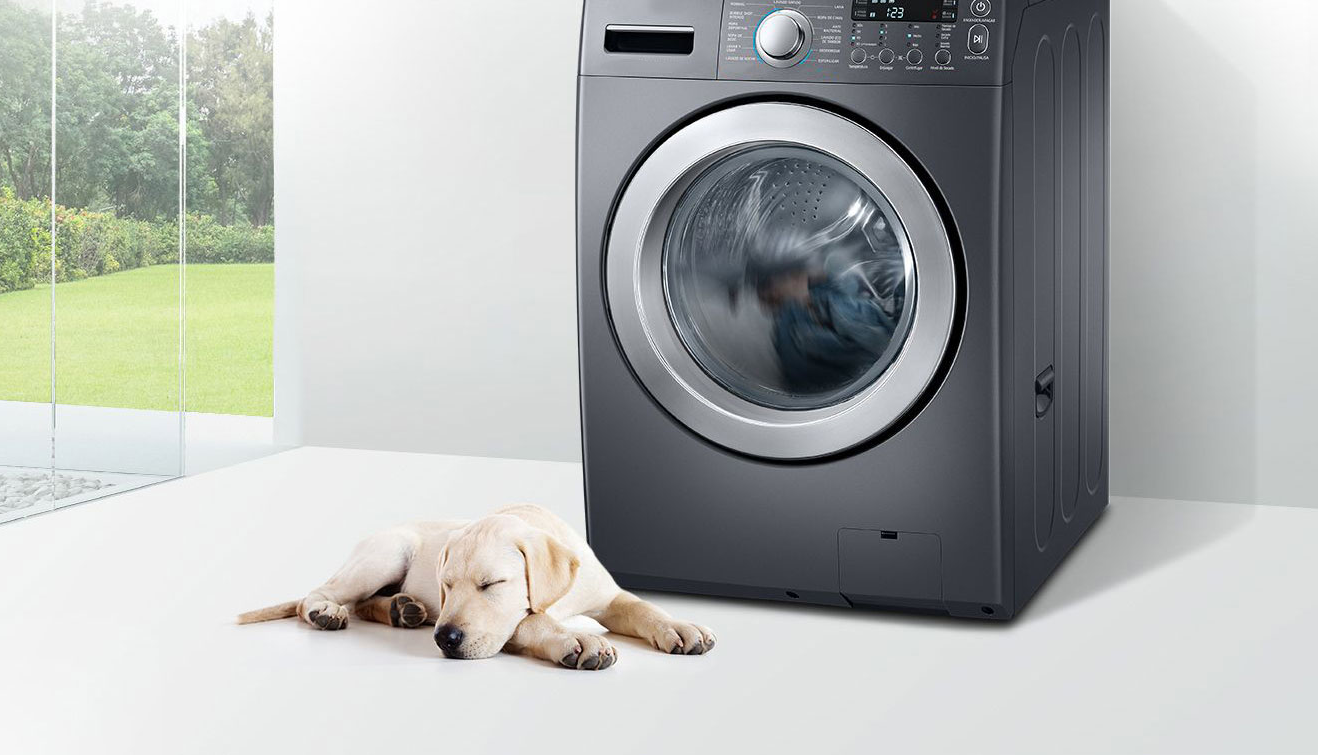
Understanding the Electric Motor Used in a Washing Machine
There are mainly three washing machine motor types, each with distinct performance profiles suited to different product tiers and applications.
1. Universal Motors
Universal motors are series-wound motors capable of running on both AC and DC power. They use a commutator and carbon brushes to continuously switch current direction, generating the rotational force needed to drive the drum.
Their main advantages are high starting torque, compact size, lightweight construction, and low manufacturing cost — making them attractive for budget-sensitive product lines. However, the carbon brushes create mechanical friction, wear, and electromagnetic interference (EMI) over time, translating to elevated operating noise, a shorter service life, and ongoing maintenance requirements.
Universal motors are best suited to entry-level top-load washers, semi-automatic machines, and older designs where upfront cost is the primary constraint.
2. Induction Motors
Induction motors eliminate the brush mechanism entirely. The stator's alternating current creates a rotating magnetic field, which induces current in the rotor and generates drive force through electromagnetic interaction alone.
Without mechanical brushes, induction motors run significantly quieter, generate less heat, and require virtually no maintenance throughout their service life. The trade-off is lower starting torque and limited speed control — without variable frequency drives, induction motors typically operate at fixed or minimally adjustable speeds.
These motors are widely used in semi-automatic washers, conventional top-load machines, front-load washers, and mid-range models where basic operational reliability matters more than precision speed control.
3. BLDC Motors
Brushless DC (BLDC) motors represent a significant leap forward in washing machine electric motor technology. Instead of mechanical brushes, an electronic commutator — comprising a PCBA control board and inverter — manages commutation precisely. The rotor contains high-strength permanent magnets, and a smart controller reads real-time data from sensors (such as Hall-effect sensors) to deliver accurate voltage pulses to the stator coils.
The result is exceptional energy efficiency (typically 20–30%+ better than conventional motors), ultra-low operating noise, and highly precise control over speed and torque. This enables the full spectrum of wash cycles — from aggressive high-speed spin to gentle low-speed rotation for delicate fabrics. BLDC motors also underpin modern direct-drive (DD) systems, removing the belt entirely for even greater reliability.
The primary limitation is the higher upfront cost due to the electronic drive circuitry required. Despite this, BLDC motors have become the global industry standard for mid-to-premium inverter washing machines.
How Do Washing Machine Electric Motors Work?
The electric motor for washing machine applications converts electrical energy into mechanical rotation. But to clean effectively without damaging clothes, modern motors do not run blindly at one speed. Instead, an intelligent electronic control system (microcontroller and motor driver) precisely adjusts motor behavior based on real-time conditions.
Dynamic Speed and Direction Control
l Wash phase: The motor rotates slowly and reverses direction frequently. This gentle agitation distributes detergent evenly and prevents tangling.
l Spin phase: The motor switches to high-speed unidirectional rotation, using centrifugal force to extract water from fabrics.
Sensor-Based Fabric Care
Advanced sensors (like load weight, Hall sensors, and turbidity sensors) feed data to the control board, which then adjusts voltage, torque, and RPM:
l Delicates (silk, wool): The motor runs at very low speeds with longer pauses, minimizing mechanical stress and typically limiting spin speed below 800 RPM to preserve fabric shape.
l Heavy items (towels, jeans): The motor delivers high torque to power through heavy loads without overheating or slowing down.
Intelligent Load Balancing
If wet laundry bunches unevenly inside the drum, sensors detect the imbalance. The control system immediately slows, stops, or reverses the motor, allowing clothes to redistribute before resuming high-speed spin. This protects both fabrics and the machine from violent vibrations.
How to Select the Right Washing Machine Electric Motor
For procurement managers and design engineers, choosing the right washing machine electric motor requires balancing multiple factors:
1. Machine Capacity and Torque
Machine capacity and torque requirements set the baseline. Larger drum sizes demand greater torque, particularly at low speeds. Direct-drive configurations are well-suited to machines rated at 20–25 kg, where high torque at low RPM is essential for heavy items. Overloading a weak motor for heavy applications significantly accelerates wear and shortens its life.
2. Noise Target
Noise targets increasingly shape motor choice, particularly for compact apartment units. Universal motors — with their brush friction and EMI — are incompatible with low-noise design goals. BLDC and direct-drive motors eliminate brushes and belt transmission, usually achieving operating noise below 55–58 dB.
3. Energy Standards
Regional energy standards impose compliance requirements that steer decisions toward higher-efficiency motors. BLDC motors typically outperform traditional motors by 20–30% or more in energy efficiency — helping OEMs pass certain certifications and reduce lifetime electricity costs.
4. Manufacturing & Total Cost
Manufacturing cost versus total cost of ownership (TCO) requires a longer view. Universal motors typically offer the lower initial price but accumulate costs through brush replacement and higher energy use. BLDC and direct-drive motors carry a higher upfront investment, but their 10-year-plus maintenance-free service life and energy savings frequently offset that premium across the product lifecycle.
Application-Based Recommendations
l Entry-level units: Universal motors — lowest cost, simple construction, easy repair, strong torque. Ideal for price-sensitive top-load or semi-automatic washers.
l Mid-range balanced models: Induction motors or belt-driven BLDC — good balance of durability, quiet operation, and moderate cost.
l Premium inverter-driven washers: Full BLDC or direct-drive (DDM) — highest efficiency, near-silent operation, precise fabric care, and maximum reliability.
Power Motor Offers Custom Washing Machine Motor Solutions
For OEM and ODM manufacturers, Power Motor offers rich appliance motor expertise. For example, we offer a multi-speed automatic washing machine motor solution that directly addresses the core limitations of conventional asynchronous motors — single speed, low efficiency, high noise, and poor reversing performance.
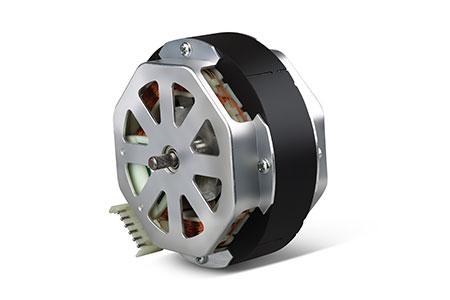
The key performance characteristics of this washing machine motor include:
l Ultra-wide speed range: 100 – 20,000 RPM with efficiency above 80%.
l Low-speed high torque: Through belt reduction, it achieves a gentle 25 RPM motion and delivers 2.2 Nm torque at just 200 RPM.
l Multiple wash modes: Programmable for "delicate," "gentle," and "strong" wash cycles — improving cleaning performance while protecting high-end fabrics.
l High reliability & low noise: Each phase operates independently. The low starting current and single-stage belt drive reduce energy loss and noise.
With over 100 dedicated R&D engineers and an advanced motor design platform, Power Motor delivers optimized custom prototypes rapidly — saving manufacturers significant development time and cost.
If you need support with washing machine motor solutions or other appliance motor applications, contact us today to discuss your torque, speed, and efficiency requirements!