BLDC Motor vs Induction Motor: Difference, Application, and How to Choose
In the world of electrical engineering, choosing the right propulsion system often comes down to a choice: BLDC motor vs induction motor. While induction motors have been the industry workhorse for decades, brushless DC technology is rapidly gaining ground. This article explores the differences between BLDC motors and induction motors, their specific applications, and how to select the optimal solution for your next project.
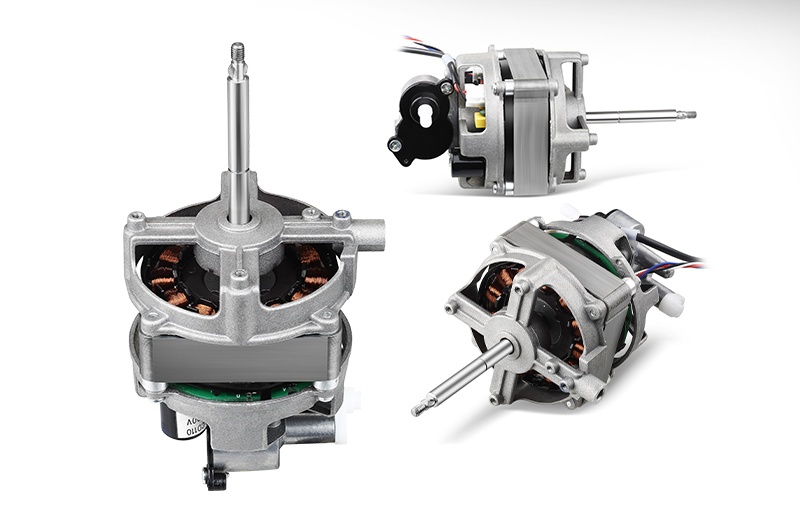
Picture shown: Fan BLDC motor
What is a BLDC Motor?
A brushless DC (BLDC) motor is a permanent magnet synchronous motor driven by direct current (DC) electricity. Unlike traditional DC motors, it utilizes an electronic commutator rather than mechanical brushes and a physical commutator to switch the direction of current in the windings.
1. Working Principle of BLDC Motors
The operation of a BLDC motor is based on the interaction between the stator’s electromagnetic field and the rotor’s permanent magnets. It typically employs Hall-effect sensors (or sensorless back-EMF technology) to detect the rotor's real-time position.
Based on this feedback, an electronic controller sequentially switches the current direction in the stator windings to create a rotating magnetic field. This field attracts or repels the permanent magnets on the rotor, driving continuous rotation with high precision.
2. Key Features of BLDC Motors
l High Efficiency: By eliminating mechanical friction from brushes and avoiding copper loss in the rotor, these motors typically achieve efficiencies of 85% to over 90%.
l Longevity and Low Maintenance: The absence of brushes significantly extends service life and reduces maintenance requirements, often limited only by bearing wear.
l Lightweight and High Power Density: For the same power output, BLDC motors are smaller and lighter, making them ideal for space-constrained designs.
l Precise Control: When paired with an electronic speed controller (ESC), they offer smooth, accurate speed and torque control across a wide range.
3. Common Applications of BLDC Motors
BLDC motors are the preferred choice for applications demanding efficiency, compact size, and precision. This includes drones, electric vehicles (EVs), robotics, high-performance power tools, precision medical devices, and high-end smart appliances like inverter air conditioners and smart washing machines.
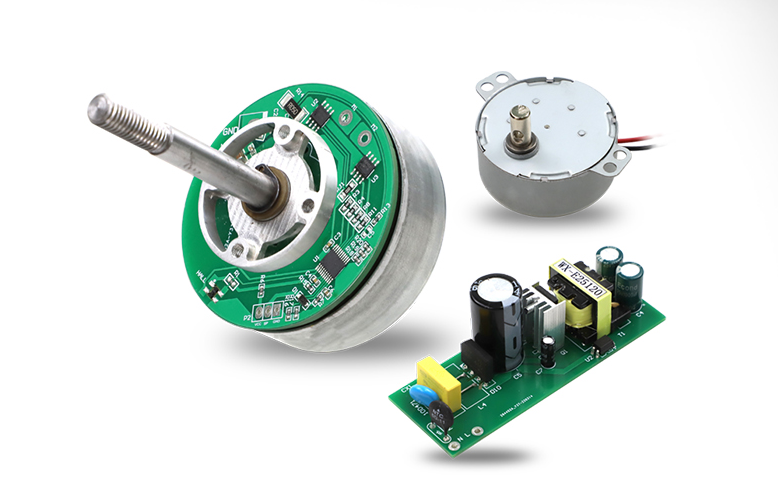
Picture shown: Floor fan BLDC motor
What is an Induction Motor?
An induction motor, also known as an asynchronous motor, is an alternating current (AC) motor. The electric current in the rotor needed to produce torque is obtained entirely through electromagnetic induction from the rotating magnetic field of the stator.
1. Working Principle of Induction Motors
When AC power is applied to the stator windings, it creates a rotating magnetic field (RMF) in the air gap. According to Faraday’s Law of Induction, this rotating field passes through the closed rotor conductors (such as a squirrel cage), inducing an electromotive force (EMF) and generating an induced current.
This current creates its own magnetic field, which interacts with the stator's RMF to produce torque. Crucially, the rotor's actual speed is always slightly lower than the synchronous speed of the stator field; this difference is known as "slip."
2. Key Features of Induction Motors
l Robust and Rugged Construction: Specifically, squirrel-cage induction motors have few failure-prone components and can handle significant overloads.
l Cost-Effectiveness: Built from simple materials like silicon steel and copper or aluminum, and lacking expensive rare-earth magnets, they have a lower initial purchase cost.
l Environmental Adaptability: These motors are highly reliable in harsh industrial environments, including high temperatures, dust, and humidity.
l Self-Starting Capability: Multiphase induction motors possess inherent self-starting torque, requiring no complex external circuitry for basic operation.
3. Common Applications of Induction Motors
Induction motors dominate scenarios requiring constant speed, high power, and extreme durability. Typical applications include industrial pumps, compressors, exhaust fans, conveyor belts, cranes, and standard household appliances like basic refrigerators.

BLDC vs Induction Motor: A Comprehensive Technical Comparison
For OEM/ODM manufacturers, understanding the technical trade-offs is essential for product optimization. The table below summarizes the key differences between BLDC motors and induction motors.
Features | BLDC Motor | Induction Motor |
Rotor Design | Permanent Magnets | Closed conductor (typically squirrel cage) |
Power & Control | DC; Requires electronic controller | AC; Direct-to-grid or VFD for control |
Efficiency | Extremely High (>85-90%+) | High (70-90%+), varies significantly with load |
Speed/Torque | Flat; stable torque across a wide speed spectrum | Non-linear; lower torque at low speeds |
Slip | None (Synchronous) | Yes (Asynchronous) |
Size & Weight | Very compact; high power density | Bulkier and heavier for same output |
Cost | Higher (Magnets & Electronics) | Lower (Standard materials & structure) |
Maintenance | Minimal (primarily the bearing) | Low (very rugged construction) |
BLDC Motor vs Induction Motor: How to Choose the Right Motor
Selecting the ideal motor depends heavily on your application’s primary goals and operational environment.
1. Choose induction motors if your goal is: Extreme cost-effectiveness, high reliability in rugged conditions, and a simplified power supply. They are the "workhorses" for heavy-duty industrial tasks where size and weight are secondary to durability.
2. Choose BLDC motors if your goal is: Energy efficiency, precise motion control, and a lightweight, compact form factor. They are essential for battery-powered or "smart" devices where performance density is a priority.
Quick Decision Examples:
l Smart, energy-saving ceiling fans: Choose BLDC for lower power consumption, silent operation, and seamless smart-home integration.
l Industrial pumps running 24/7 at fixed speeds: Choose an induction motor for its robustness and lower upfront capital expenditure.
l Battery-powered drones or EV components: Choose BLDC because high efficiency and power-to-weight ratios are critical for maximizing battery runtime and performance.
Power Motor: Your Reliable Electric Motor Partner
Navigating the complexities of the BLDC motor vs induction motor choice requires a partner with deep technical expertise. Since 2001, Power Motor has been a leading provider of high-quality, safe, and reliable motor solutions.
Power Motor offers an extensive product portfolio, including BLDC motors, brushed DC motors, AC universal motors, and gear motors. Serving sectors from smart home appliances and medical care to automotive precision parts and industrial automation, we provide more than just hardware.
With a massive application database, a stable supply chain, and large-scale automated production, we deliver customized (OEM/ODM) services that reduce your R&D time and costs.
Whether you need a high-torque BLDC for a surgical tool or a rugged induction motor for industrial use, Power Motor ensures the optimal balance of performance and cost-efficiency for your brand!