What Motor Is Used in Robot Vacuum Cleaners?
The motor is the core component of a robot vacuum cleaner, powering both high-velocity suction and precise movement. Its efficiency directly dictates cleaning performance, acoustic comfort, and long-term lifespan. Selecting the right motor for robot vacuum cleaner applications is critical for OEMs. In this article, Power Motor will explore the primary motor types used today and the criteria for choosing optimal drive solutions.
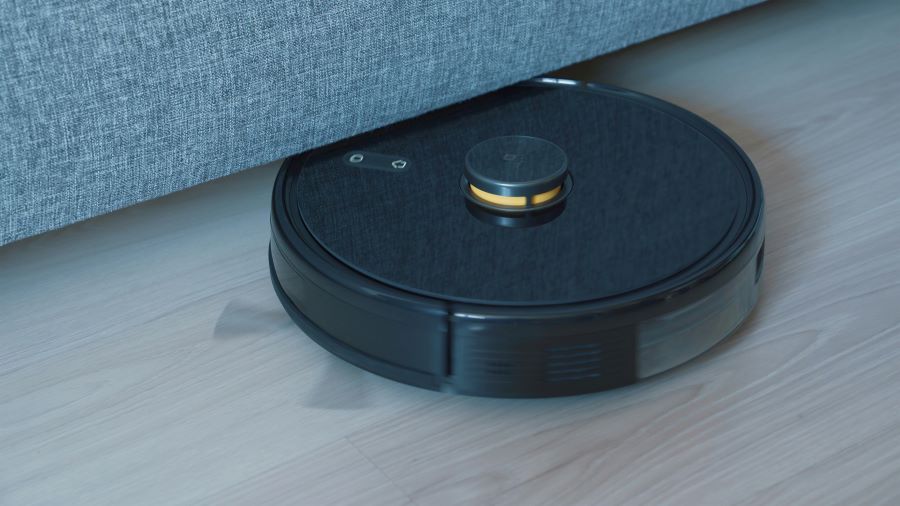
Essential Motors Within a Robot Vacuum Cleaner
A robot vacuum is not a single-motor machine; it is a complex, multi-tasking system that requires several independent motors working in synchrony. For equipment manufacturers and OEM/ODM designers, understanding the specific requirements for each "node" in the system is vital for achieving high performance.
1. The Suction Motor (Fan/Turbine Motor)
This is the heart of the cleaning system. The suction motor drives a centrifugal fan at extremely high speeds to create the negative pressure (vacuum) required to lift debris. Modern high-end models require suction power ranging from 2,000Pa to as high as 8,000Pa. To achieve this in a compact footprint, manufacturers may utilize brushless DC (BLDC) motors capable of exceeding 100,000 RPM.
2. Drive Motors for Navigation
The mobility of the unit depends on the left and right drive wheel motors. These motors handle traction, steering, and the ability to climb obstacles like carpets or door thresholds. To provide the necessary torque at low speeds, these are almost always paired with a reduction gearbox (either planetary or parallel). This "motor + gearbox" assembly ensures the motor robotic cleaner can navigate complex home environments without stalling.
3. Auxiliary Motors: Brushes, Mops, and Pumps
Additional motors are required for mechanical agitation. The roller and side brush motors are designed to sweep and collect floor debris, requiring stable torque output when dealing with hair tangles or the resistance of carpets. In the increasingly popular "mop and vacuum" hybrids, micro-motors drive vibrating or rotating mop pads, and specialized high-pressure water pumps ensure precise liquid dispensing.
Main Motor Types in Robot Vacuum Cleaners
When choosing a motor for robot vacuum cleaner production, manufacturers mainly decide between two primary architectures: brushed and brushless DC motors.
1. Brushed DC Motor for Robot Vacuum Cleaner
The brushed motor for robot vacuum cleaner utilizes mechanical commutation via carbon brushes and a commutator.
l Pros: They are highly cost-effective, typically ranging from $15 to $25 per unit, and feature simple control circuitry with high starting torque.
l Cons: The physical friction results in a shorter lifespan (approximately 1,000 to 2,000 hours), lower energy efficiency (75-80%), and higher acoustic noise.
l Target Segment: These are generally reserved for entry-level models (sub-$200) where BOM (Bill of Materials) cost is the primary driver.
2. Brushless DC Motor for Robot Vacuum Cleaner (BLDC)
BLDC motors use electronic commutation, eliminating the need for physical brushes.
l Pros: They offer superior energy conversion efficiency (85-90%+), an extended lifespan (over 10,000 hours), and significantly quieter operation. They allow for much higher RPMs, which is essential for premium suction power.
l Cons: They require more complex electronic drivers and have a higher initial manufacturing cost.
l Target Segment: BLDC is the standard for mid-range to flagship motor robotic cleaner solutions, where durability and user experience are paramount.
For manufacturers seeking a reliable motor for robot vacuum cleaner products, the Power Motor PBL4108014 offers a robust BLDC solution that integrates high speed with compact dimensions. More importantly, Power Motor offers custom robot vacuum cleaner motor solutions!
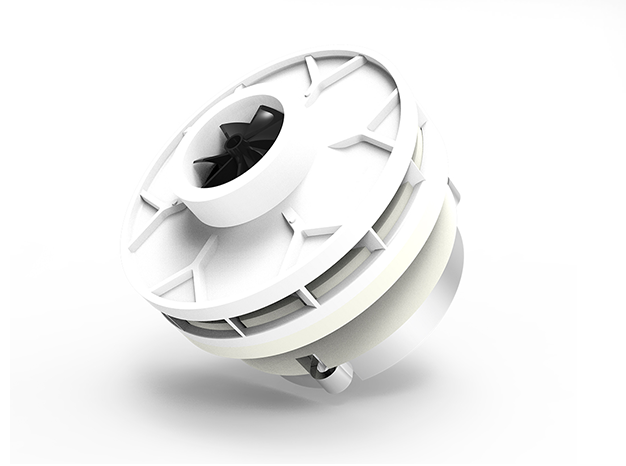
Picture shown: Vacuum cleaner robot BLDC motor
How to Choose the Right Robot Vacuum Motor Manufacturers
For OEM/ODM companies, selecting a motor supplier involves more than just looking at a spec sheet. The following five dimensions are critical for product success:
1. Performance and User Experience
The modern consumer demands high suction with low noise. Effective motor design must balance aerodynamics with acoustic engineering. High-performance motors should maintain a noise floor between 40dB and 65dB while delivering maximum traction to ensure the robot does not get stuck on thick rugs.
2. Battery and Energy Budget
In cordless appliances, the motor's efficiency is the single biggest factor in runtime. A highly efficient motor reduces thermal losses, allowing a robot to operate 20-30% longer on the same battery capacity. This minimizes heat-related performance throttling and reduces the frequency of "return-to-base" charging cycles.
3. Reliability and Lifecycle
A robot vacuum is an investment. Consumers expect years of trouble-free operation. Utilizing motors that feature integrated protection against overcurrent, overvoltage, and rotor locking (stall protection) is essential. Eliminating the wear-and-tear components—like brushes—in high-duty cycle areas (like the suction fan) is the most effective way to improve MTBF (Mean Time Between Failures).
4. Cost and Platform Strategy
Manufacturers must align their motor selection with their platform strategy. While a flagship model demands the highest-spec BLDC motor, an entry-level "budget" model might leverage a high-quality brushed motor for robot vacuum cleaner to maintain price competitiveness. A versatile supplier that offers both options allows a brand to scale its technology across an entire product lineup.
5. Supplier Ecosystem and Co-Design
Space is at a premium inside a robot vacuum. The best results come from "integrated drive modules"—where the motor, driver, and gearbox are co-designed. This reduces the footprint, lowers the assembly cost, and ensures that the gearbox is perfectly tuned to the motor's RPM-torque curve.
Why Power Motor is the Preferred Partner for Robot Vacuums
With over 20 years of technical accumulation in the micro-motor industry, Power Motor has established itself as a leader in high-performance drive solutions. We provide a comprehensive suite of products tailored specifically for the vacuum and robotics sectors.
Power Motor’s technological edge lies in our ability to deliver high power density. Our PBL series of high-speed BLDC motors reaches speeds over 100,000 RPM, providing the extreme suction required for modern deep-cleaning standards while maintaining an industry-leading power-to-weight ratio. Furthermore, our expertise in integrated technologies allows us to provide customized "Motor + Gearbox" solutions that optimize for low noise and high reliability.
Whether you are developing a flagship smart home appliance or a specialized industrial cleaning robot, Power Motor offers the customization and manufacturing scale required to bring your product to market efficiently!
Conclusion
The evolution of the robot vacuum cleaner is fundamentally an evolution of motor technology. From the cost-effective brushed motor for robot vacuum cleaners to the high-efficiency BLDC systems powering today's smart homes, the right motor choice defines the product's market position.
Power Motor remains dedicated to providing high-performance, customizable, and reliable motor solutions that drive the future of robotic cleaning. Contact Power Motor today to discuss your OEM/ODM requirements!