Electric Valve Motor Solution
1、Market conditions
Electric control valves represent one of the largest market segments globally, accounting for approximately 43% in 2024 (with pneumatic valves at around 33%). Driven by industrial automation upgrades, new energy initiatives, and policy support, this segment is projected to maintain robust growth through 2030. Electric valves, with lower energy consumption and higher precision than pneumatic systems, are poised to gain further market share.
2. Market requirement or problem
At present, most of the electric valves on the market have the following problems:
1.Low control accuracy makes it difficult to achieve ideal results.
2.The output is too small to meet the requirements.
3.If not used for a long time, the motor is difficult to start.
4.Occupy a large space.
3、According to the market needs, power motor provides solution that are technically achievable.
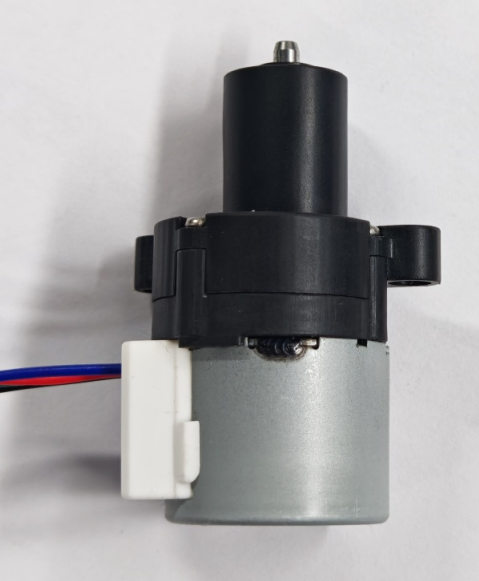
Motor outline drawing
In order to solve the existing motor problems in the market, power motor proposes new solutions by optimizing the design of gears and motors:
1.Compared with the traditional DC motor, the stepper motor has the advantages of higher control precision, position adjustment, low speed and high torque.
2.Multi-stage gear transmission can effectively increase the output torque, and provide high starting torque for the front valve stem to overcome the static friction force of starting.
3.A protrusion is installed at the bottom of the screw rod in the gearbox to reduce the contact area when it reaches the bottom, thereby decreasing static friction and preventing issues such as difficulty in starting due to excessive friction when the valve stem reaches the bottom.(A small protrusion is located at the bottom of the screw rod to prevent extensive contact between the nut's top and the rod's base. This design ensures that when the screw rod is inserted into the nut, the side of the protrusion contacts the side of the nut's front cutout.)
4.Small occupied space, large output torque.
Contact Us Today:
�� Tel:400-666-3630, ✉ Email: info.power@power-motor.com
Note: This article is contributed by Power Motor Research and Development Department