Torque Density and Design Power Motor's Guide to Selecting the Right Gear Motor Type
Choosing between a worm gear set and a more conventional gear motor (like spur or helical) involves a critical trade-off between torque density and efficiency. In mechanical design, the required output force and the available space dictate the type of gearing. As expert worm gear suppliers, Power Motor guides engineers through this selection process, ensuring the final gear motor assembly perfectly matches the application's unique operational needs.
Understanding Torque Density and Footprint
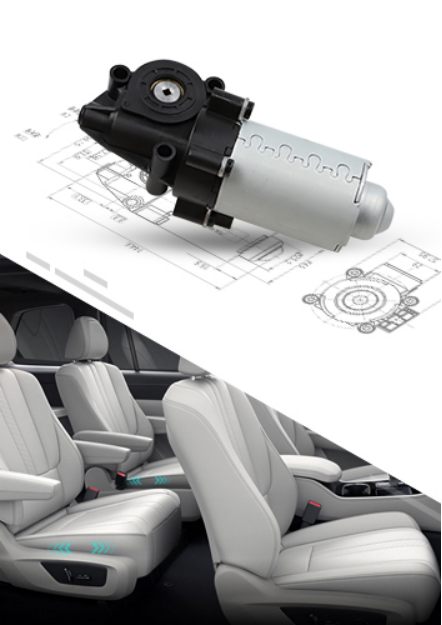
Torque density refers to the amount of torque a gear system can deliver relative to its size and weight. Worm gear sets are generally superior in this aspect. Because of their geometry—where the worm thread drives the larger gear—they can achieve massive single-stage reduction ratios (often 10:1 up to 60:1) that would require multiple stages of spur or helical gears. This allows a DC worm gear motor to provide substantial low-speed torque in a highly compact, right-angle package. This makes them ideal for systems where space is limited, such as automotive seating or medical lifts. However, this high torque density comes at a cost, as we discuss below.
The Critical Trade-Off Efficiency vs. Non-Reversibility
The fundamental difference lies in the mechanism of engagement. Standard spur or helical gears primarily transmit power through rolling contact, resulting in high mechanical efficiency (often 90% or more). Worm gears, conversely, rely heavily on sliding contact between the worm and the gear teeth. This sliding action generates significant friction, leading to lower efficiency (often between 50% and 80%) but introduces the critical benefit of non-reversibility or the self-locking principle.
For applications requiring the load to be held securely when the motor is off (e.g., hoists, actuators, or indexing systems), the self-locking feature of a worm gear is invaluable. As leading worm gear suppliers, we emphasize that this feature eliminates the need for an external brake, simplifying the design. Conversely, if the application is continuous-running and requires maximum energy efficiency (e.g., fans, pumps, or conveyors), a high-efficiency spur or helical gear motor would be the better choice. A specialized worm gear manufacturer can help optimize this balance.
Power Motor’s Role as Worm Gear Suppliers
Ultimately, the choice depends on your non-negotiables: do you need the highest efficiency for energy savings, or do you need the high torque density and inherent safety lock of a worm gear? Power Motor acts as both a worm gear manufacturer and a broad-spectrum gear motor specialist. We offer custom-designed worm gear solutions where we optimize the lead angle, materials, and lubrication to maximize efficiency while maintaining the necessary non-reversibility. By choosing a comprehensive worm gear manufacturer, you ensure your gear motor is engineered not just for torque, but for the specific duty cycle and safety requirements of your system.