What is AC Motor and how to select one for your project
AC motors are widely used in many kinds of applications, eg. Blender, chopper, food processor, copper machine, slicer, mixer, compressor... depend on the characteristic of different type of motor. Power Motor is offering 2 types of motor in Generally.
AC universal motor
Which is offering high speed and big power in the applications of blending food with fantastic taste.
Basically, motors and gearboxes can be mixed and matched as needed to best fit your application, but in the end, the overall gear motor is the driving factor. There are many motor and gearbox types that can be combined, i.e. the worm, spur and planetary gearboxes can be combined with universal, permanent magnet DC, or brushless DC motors. Although many different motor and gearbox combinations are available for your application, some combinations will be more efficient and cost-effective than the others. Understanding the application and obtaining accurate ratings and characteristics for the motor and gearbox is the basic knowledge to integrate the gear motor into your system.
There are 4 simple steps to lead designers to the best motor & gearbox choice for a particular application:
1. Determine application requirements, see “Application Checklist”
2. Select Motor Type, see “Motors Quick Reference Guide”
3. Select matching speed and torque output for gear motor, see “Gear Motor Performance Curve”
4. Ensure application yield strength and pull up torque match the application requirements
Input Power Source | Voltage Frequency(measured in Hz) Maximum Current (measured in amps) Control Type (if applicable) |
Environment | Ingress Protection(IP)Rating Ambient Temperature Application Temperature |
Gearmotor Specifications | Size and Weight Life Expectancy/Maintenance Noise |
Gearmotor Performance | Speed and Torque Starting/Stall Torque Duty Cycle(“on”time and “off”time) |
General Requirements | Mounting Orientatian & Type(e.g.face) Overhung and Side Loads Envelope Size Lubrication Selection (e.g. low-temperature grease or food-grade grease) |
Application Checklist - use this checklist to help formulate the specific requirements to ensure the gear motor vendor has the critical information necessary to achieve the best match between the gear motor and the application.
As the motor or gearbox selecting process begins, it is important that the designer must gather the relevant technical and commercial requirements in the design process. The gathered design inputs information will then be used in the selection process and will dictate the ideal motor for the application. Failure to gather the proper inputs can lead the designer down an untended path. Therefore, it is helpful to use the “Application Checklist” when developing the motor specification. These parameters, along with some project specific requirements, will be essential when navigating the selecting process.
Next, the designer must consider what type of motor technology best suits the intended application. Using the design inputs, the “Motors Quick Reference Guide” can be used as a selection matrix in the first step of the decision process. This reference guide details three common motor types and provides general information to consider when selecting each motor. Because each application has its own unique characteristics, it is important to determine which of the parameters (i.e. horsepower, efficiency, endurance, starting torque or noise level, etc.) are most important to the application under consideration. During the motor selection process, by looking at the required speed and torque of the application, it should become evident to the designer if the motor chosen requires a gearbox to meet the necessary requirements. If a gear motor is necessary for the application, another level of complexity will be added and several additional criteria need to be evaluated.
DC |
AC Universal | BLDC | |
Voltage | DC | AC | AC,DC(Contol) |
Speed | 1000-5000 | 1600-3400 | 1000-5000 |
Horsepower | Medium | Low-Medium | High |
Efficiency | 60-70% | 40-80% | 65-80% |
Life | Medium | Very High | Very High |
Maintenance | Medium | Very Low | Very Low |
Noise | Medium | Quiet | Very Quiet |
Speed Regulation | Fair | Good | Excellent |
Starting Torque | Very High | Low-Medium | Very High |


Motors Quick Reference Guide - provides a comparison of common parameters used during the motor selection process
As the designer looks at selecting a overall gear motor, there is an quick alternative which is to select a pre-engineered gear motor. This is effective mean of finding the most compatible gear motor as it reduces design time and project risk for the designer. When selecting a pre-engineered solution, the manufacturer has done much of the heavy lifting to ensure that the motor and gearbox combination will work properly together. Since performance feasibility study and testing have been performed by the manufacturer, gear motor failures caused by miscalculations or improper component matching will be minimized. Due to the complexity of selecting motor and gearbox, Power Motor focuses on finding an ultimate gear motor solution for your need.
Once again, looking back to the gear motor performance data gathered from the “Application Checklist”, the speed and torque required for the application is critical in selecting the gear motor combination. Using the speed and torque measurements the designer can then select the performance curves that match the application needs. The “Gear Motor Performance Curves” combines the performance of the motor and gearbox by displaying speed, torque and efficiency.
Finally, after selecting a few performance curves that appear to meet the application needs, it is important to review the design limitations. Look for the following information in the performance calculations and use it to determine if the chosen gear motor will cause any issues within the application.
Thermal characteristics
Full-load gearbox torque
Gearbox input speed
Gearbox yield strength
Intermittent duty considerations
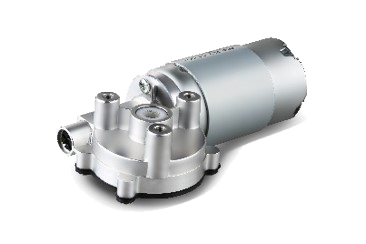
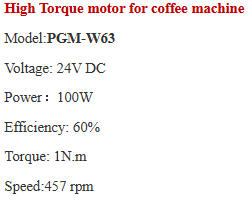
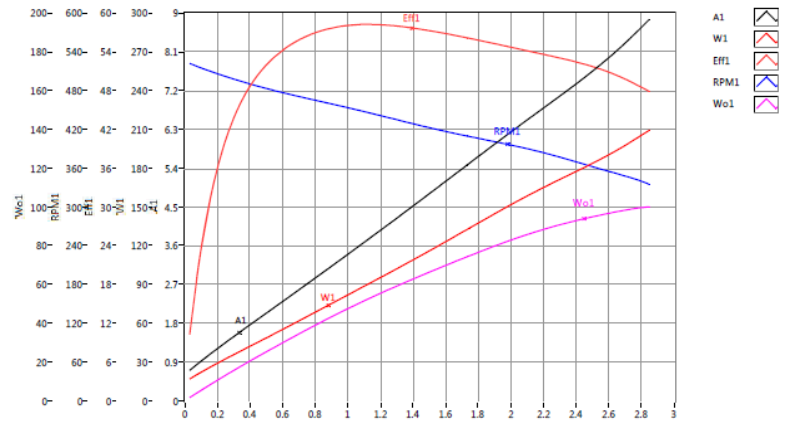
Gear Motor Performance Curves – the Speed / Torque and Efficiency / Torque curves for a Permanent Magnet DC Gear Motor
For more information or help of selecting a desirable gear motor, talk to our sales engineer for any off-the-shelf products or custom engineering services today.
Contact Us Today: Tel:400-666-3630, ✉ Email: info.power@power-motor.com
Note: This article is contributed by Power Motor Sales Department