Applications of Stepper Motors in Cars
Vehicle automation and electrification require precise motion control, making stepper motors essential. These motors convert electrical pulses into exact mechanical movements with high accuracy.
From cockpit displays to safety systems, the applications of stepper motors continue to expand, providing automotive manufacturers with the critical reliability and precision demanded by modern automotive engineering.
Applications of Stepper Motors in Cars
What is a stepper motor used for in cars? To understand this, we need to first know what a stepper motor is. This specific motor type moves in fixed, discrete steps, dividing a full rotation into a larger number of precise movements.
It allows for exact positioning and speed control without requiring complex feedback sensors. For automotive engineers and electronics manufacturers, this technology offers a perfect balance of accuracy, durability, and cost-effectiveness.
Due to their unique advantages, stepper motors are widely used in car systems like:
1. Cockpit Displays and Information Systems
Visual clarity and accuracy are vital in driver information systems. Stepper motors are the standard mechanism behind the smooth operation of analog instrument clusters. They receive electrical pulse signals from the engine control module (ECM) to rotate pointers to the exact angle required for:
l Speedometers
l Tachometers
l Fuel Gauges
l Temperature Dials
Beyond traditional gauges, stepper motors are essential in modern head-up displays (HUD). They precisely adjust the internal reflective optics. This ensures the projected image on the windshield aligns perfectly with the driver’s line of sight, maintaining clarity and reducing eye strain.
2. Lighting and Safety Systems
One of the most safety-critical uses of stepper motor technology is found in adaptive front-lighting systems (AFS). Static headlights can leave blind spots on winding roads, but AFS relies on stepper motors to dynamically adjust the headlight angle for maximum safety.
l Horizontal Adjustment (Bending): The motor pivots the headlight beam into the curve. This significantly improves visibility and driver reaction time.
l Vertical Leveling: Linear stepper motors adjust the beam height. This compensates for vehicle load changes or braking pitch, preventing glare for oncoming drivers.
The high holding torque of stepper motors is a major advantage here. It ensures the optical system maintains a steady beam angle, even when the vehicle faces heavy road vibrations.
3. Body and Comfort System Adjustments
Passenger comfort is a major differentiator in the automotive market. Stepper motors facilitate complex movements within body control systems to enhance the user experience.
HVAC Systems (Heating, Ventilation, and Air Conditioning)
Stepper motors are used to drive different actuators, such as controlling air mixing doors, defrost flaps, and temperature regulation valves. This precise control allows for exact air blending. Crucially, in electric vehicles (EVs), this precision helps manage thermal energy more efficiently, maximizing battery range.
Mirrors and Seats
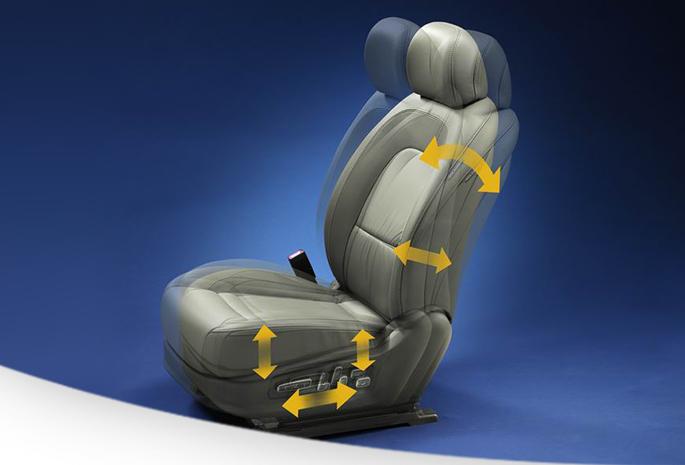
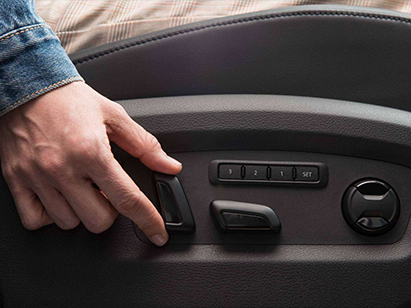
For side-view mirrors, stepper motors allow for fine mechanical adjustments in both vertical and horizontal planes. They are also integral to modern seating systems, driving mechanisms for lumbar support, seat height, and recline angles. This precision enables memory seat functions, allowing drivers to recall their exact preferred settings instantly.
4. Powertrain and Engine Control
In internal combustion and hybrid powertrains, airflow management is essential for emissions control and engine stability.
Idle Air Control (IAC)
In traditional setups, stepper motors actuate the valve stem. This regulates airflow bypassing the throttle plate, ensuring a stable idle without stalling the engine.
Electronic Throttle Control (ETC)
In modern ETC systems, stepper motors act as actuators that track movement via step counting.
l This creates a "virtual throttle position."
l It allows the system to maintain accurate control loops.
l It can eliminate the cost and weight of additional external position sensors or return springs.
Benefits of Stepper Motors in Cars
The uses of stepper motors in automotive systems are for many reasons. Here are their three core design advantages.
1. High Positioning Accuracy and Repeatability
Standard hybrid stepper motors offer a step angle of 1.8° (200 steps per revolution). This can be refined further using microstepping technology (e.g., 1/32 steps).
Crucially, the error in a stepper motor is non-cumulative. It is usually only 3% to 5% per step. This repeatability is essential for safety-critical features like headlight leveling, where even a single degree of variance is unacceptable.
2. High Holding Torque
Different from standard DC motors, stepper motors maintain high torque even when stationary, which is known as holding torque. It is vital for applications like AFS or HVAC flaps. The mechanism must hold a fixed position against external vibrations or air pressure without drifting out of place.
3. Cost-Effective Open-Loop Control
Stepper motors often operate in an open-loop control system. It means they do not necessarily require external feedback sensors (encoders) to verify their position. By eliminating these expensive and complex feedback hardware components, OEMs can significantly reduce the total system cost (TSC).
4. Reliability and Longevity
Stepper motors are brushless devices. It means they avoid the mechanical wear associated with brushes in traditional brushed DC motors. Their lifespan is primarily limited by the bearings and can exceed 20 years of operation. This aligns perfectly with the extended lifecycle requirements of modern vehicles.
Power Motor: Your Reliable Partner for Automotive Motors
When selecting a motor partner, experience and scale are vital. Established in 2001, Power Motor has grown into a premier manufacturer with deep expertise in custom electric motors and integrated design. With an annual production capacity exceeding 30 million motors, we are a trusted partner for OEMs and tier-1 suppliers worldwide.
We understand the rigorous demands of the automotive industry. Our design and manufacturing processes strictly adhere to international quality management systems, holding certifications including CE, ISO, and IATF 16949: 2016.
Power Motor’s extensive automotive portfolio provides robust solutions for:
l Smart Seating: Electric lift, fore/aft, and multi-directional adjustments.
l Body Systems: Reliable motors for power tailgates and windshield wipers.
l Precision Control: Advanced mechanisms for steering wheel position adjustment.
Whether you are designing the next generation of AFS, optimizing EV thermal management, or refining cockpit instrumentation, we can help. Our vast R&D experience ensures we deliver the precise specification your application demands.
Conclusion
The applications of stepper motors in cars have evolved significantly. We have moved from simple gauge movements to complex, safety-critical systems that define the modern driving experience.
Their ability to deliver high torque, precise positioning, and exceptional reliability makes them indispensable. At the same time, as the industry pushes for smarter, safer vehicles, it places increasingly precise and complex demands on automotive motors.
For OEMs and tier-1 suppliers looking to integrate superior motion control, partnering with a dedicated specialist is the next step. Power Motor is here to help with more than 20 years of experience. Contact us if you need any support today!