Choosing the Right Type of DC Motor for Practical Applications
We evaluate brushed and brushless DC motors by focusing on the functional needs of each project. In daily engineering work, our team compares torque performance, expected service life, and operating noise to determine which structure fits best. When we design systems such as a car seat motor, lifting mechanism, or compact actuator, we look at how each motor type adapts to continuous use and varying load conditions. Experience at Power Motor shows that brushed motors support stable low-speed applications, while brushless designs offer smoother rotation with reduced mechanical wear. These considerations guide us in selecting configurations that align with customer performance goals.
Integrating Motor Features Into Real Working Conditions
Our company reviews the requirements of each application before defining the final motor architecture. Brushed motors may fit solutions where users expect moderate duty cycles and a cost-balanced structure, while brushless motors often support environments that need quiet motion or extended longevity. The role of a gearbox motor manufacturer involves matching these features with the mechanical layout and control system of the customer’s equipment. Whether the project involves interior automotive adjustments or ergonomic workstation systems, we make sure each choice enhances long-term reliability. A careful comparison of torque, noise, and maintenance needs helps ensure the final configuration delivers consistent performance.
Adjustable Desk Gearbox Motor for Multiple Applications
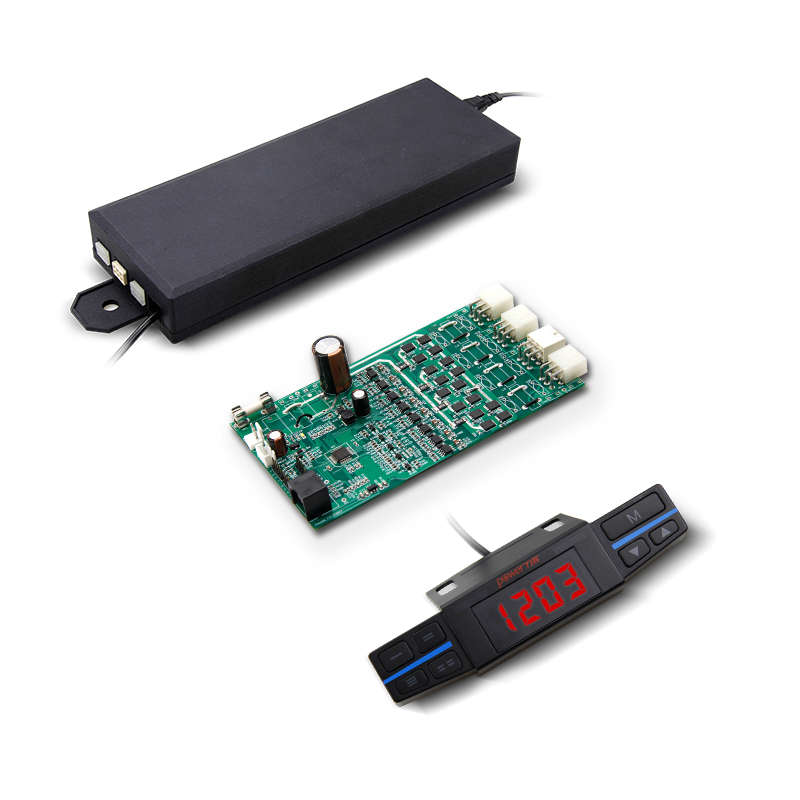
The PGM.W060 series provides a helpful reference when explaining how motor choices differ in real applications. Our PGM.W060 unit operates as a 24 V low-voltage DC worm-gear reduction motor, delivering a torque rating of 11 N·m. The design features a self-locking force above 60 kg, enabling extended static stability without sliding. Load current remains below 3.6 A, and the system pairs with matching controllers and button panels to create a unified lifting mechanism. In many cases, customers compare this model with other brushed and brushless options to understand which structure fits the motion pattern of their equipment. The product also serves as a functional alternative to a car seat motor, demonstrating how our solutions adapt to different mechanical environments while maintaining stable operation. For our role as a gearbox motor manufacturer, examples like this help illustrate how both motor types respond to different technical demands.
Conclusion: Choosing the Motor Type That Fits System Requirements
Selecting between brushed and brushless DC motors becomes clearer when the system’s practical needs guide the decision. Our company considers torque expectations, noise levels, duty cycles, controller compatibility, and long-term durability before finalizing any motor type. With the experience we continue to build at Power Motor, we focus on aligning each solution with customer requirements and ensuring that the chosen motor—brushed or brushless—supports dependable service throughout daily operation.