
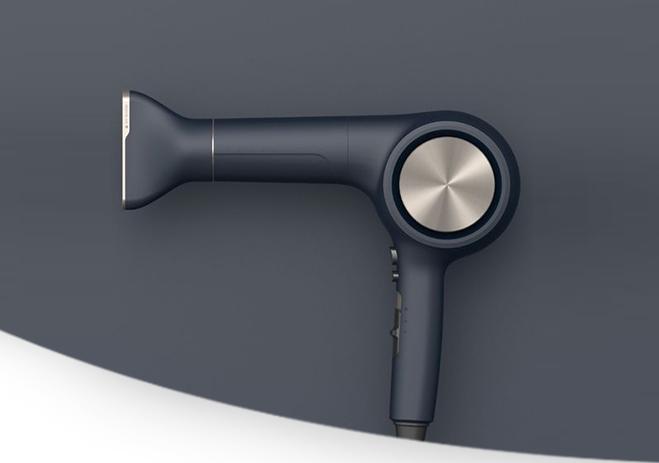
Choose a hair dryer motor from the required airflow operating point, air path, supply and package. Evaluate the motor, impeller and controller together, then measure temperature rise, sound and protection behavior in the intended dryer.
Compare motor routes against the same duty
| Route | Selection questions |
| Universal motor | Supply and frequency, fan interface, loaded speed, brush arrangement and operating cycle. |
| Brushless DC motor | Motor winding, DC bus, drive, feedback, impeller load and startup behavior. |
Neither route establishes noise, efficiency or service life on its own. A motor speed without its load and supply conditions is not an airflow specification. Compare candidate assemblies in the same duct and at the same operating condition.
Start with an identified configuration
The current application catalog lists the PU.5410 universal-motor configuration. Use its own parameter table, dimensions and available curve for discussion; do not transfer speeds or performance from a different archived configuration.
PU.5410 configuration, parameters and dimensions
Select the controller separately
The application page lists hair dryer controllers separately. Confirm the motor winding, supply, back EMF, sensing, current limits and protection logic before selecting a pairing. A controller speed capability does not identify a compatible motor or validate the complete dryer.
Hair dryer motors and controllers
Prepare the sample evaluation
- Supply and target market; impeller and duct drawings; available space and mounting.
- Required airflow and pressure at the intended operating point; loaded speed and control range.
- Run duration, inlet restrictions, ambient conditions and temperature limits.
- Agreed sound-measurement setup, startup and abnormal-operation checks.
Discuss the candidate and evaluation plan with the engineering team. Product-specific performance requires the agreed configuration and complete-device validation.