
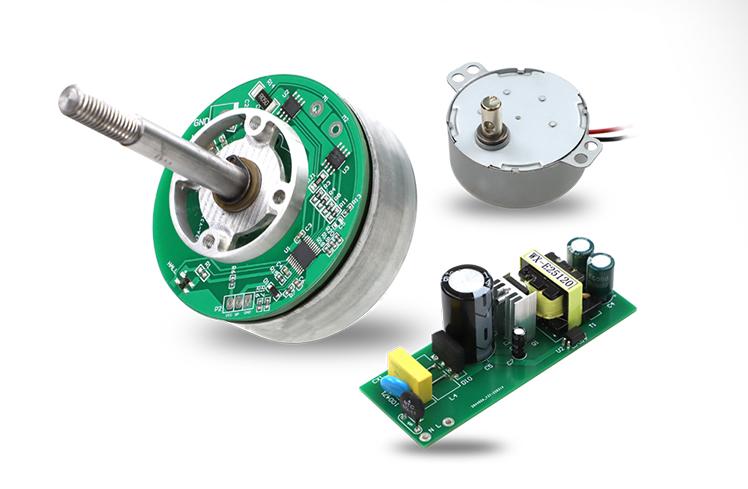
A brushless DC motor converts electrical power into rotation by electronically switching current through stator windings. The rotor carries permanent magnets. A compatible controller supplies the phase currents in the right sequence; connecting a bare multi-phase motor directly to a DC battery does not provide normal continuous rotation.
How electronic commutation works
The drive needs rotor-position information to create useful torque. It may receive Hall-sensor or encoder signals, or estimate position using a supported sensorless method. Six-step commutation and field-oriented control are different approaches; the available method depends on both the motor and drive. A controller’s DC input rating is not a direct phase-voltage wiring instruction.
Sensored or sensorless?
| Operating requirement | What to check |
| Starting with a load | Starting torque, position information and the drive’s startup strategy |
| Very low speed | Whether the selected estimation or sensing method remains reliable |
| Speed regulation | Feedback source, controller tuning and response to load changes |
| Positioning | Encoder/interface compatibility, reference position and mechanical backlash |
| Rapid stopping | Braking method and where regenerated energy will go |
Can a BLDC motor reverse?
Many systems support both directions through their controller. Use the documented direction command and supported motor/sensor configuration. Do not reverse the controller’s DC supply polarity. Confirm that the driven mechanism, cooling arrangement and firmware permit reversal, and stop or decelerate as required before changing direction.
What brushless does and does not guarantee
BLDC removes brush contact and commutator wear. Bearings, seals, gears and aerodynamic loads can still create friction and noise. Efficiency depends on the operating point and drive losses, not just motor type. A high-efficiency motor at one speed may not be the best choice across a wide load cycle. Motor temperature, magnetic limits and controller current limits remain part of the selection.
An application check before choosing a model
- Specify loaded speed and torque, startup load and duty cycle.
- Match voltage range, peak and continuous phase-current requirements, and feedback interface.
- Measure temperature and sound in the final housing, with its intended airflow.
- Check obstruction response, controlled stopping and restart behavior.
- Compare efficiency at representative working points using the complete motor-and-drive system.
Read the DC motor controller selection guide