
End-product application
16 / 23Slicer
Slicer: Food size, positioning and feed rhythm affect slicing results. Review cutting resistance and stopping requirements when obstructed.
Related models and specificationsParent applicationHome Appliances↖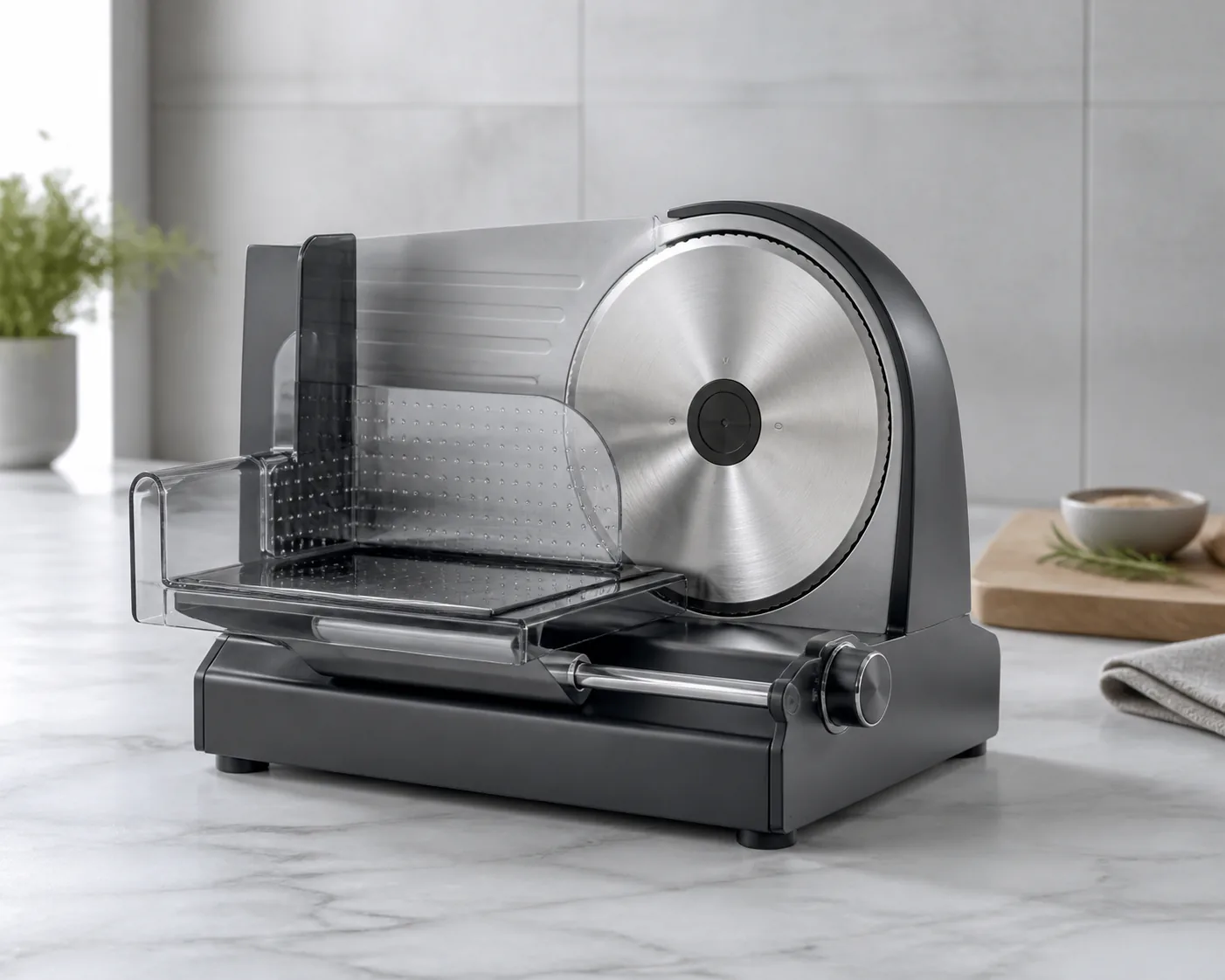
Related motors
Related models and specifications
Review the data and drawings as a starting point for selection.
Share your load, supply, installation space and control requirements. Our engineering team can help evaluate your options.
Final selection depends on load, supply, installation space, control requirements and complete-device validation.
Selection requirements
What do we need to know?
Please share the operating conditions below. The selected motor still needs testing in your equipment to confirm performance and fit.
Motion and load
material size and condition, feed rhythm, cutting or breaking resistance, start-up and clearing sequence, and jam boundaries
Power and control
power supply, run and stop conditions, interlocks, feedback, protection and fault reset
Space and interfaces
the envelope inside the countertop appliance, interface to the processing member, separation from food zones, and assembly and cleaning access
Duty and environment
temperature and humidity near food, vapor, residue, cleaning agents, cleaning frequency, and cross-contamination control
Testing and production
the intended processed result, different loading conditions, process hand-offs, abnormal blockage, cleaning and service, noise, and consistency across repeated batches
Select motors for the actual operating conditions and validate them in the complete device.
Same application field
Related equipment
See selection requirements for other equipment in this field.
Need help choosing a motor?
Discuss your equipment requirements or drawings with our engineers.