
Blender motor endurance depends on load, cooling, bearings, brushes and the operating cycle. Define a repeatable test before comparing service-life claims or design changes.
Define blender motor endurance from use frequency, run time per cycle, load, cooling intervals and environment. Accumulated bench-test hours cannot be converted directly into ten years of service, and an appliance warranty is not a motor lifetime rating.
Before selecting speed and power, define ingredients, fill level, blade and jar geometry, supply and test cycle. Endurance and power results under different loads are not directly comparable. Distinguish electrical input power from shaft output power.
For kitchen blending drives, review PU.8840230-8102-AL in the current catalogue. Use this configuration’s own drawing and performance table; validate life, temperature and blocked-rotor protection in the intended appliance and load.
Development targets should be agreed for the intended blender rather than treated as market-wide specifications. Prototype evaluation should cover starting, loaded operation, cooling and abnormal conditions.
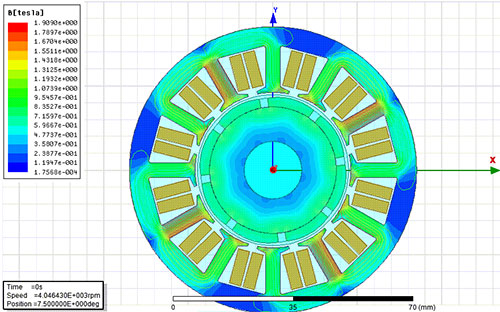
1. The archived design discussion refers to PU9545 and PU9540. Evaluate a current configuration using its own drawing, winding, supply and performance data. Historical model comparisons do not replace temperature-rise and blocked-rotor validation for the current product.
2. Endurance and noise comparisons need matched test reports stating sample count, duty cycle, load, temperature, failure criteria, measurement distance and background sound. Historical figures in this article are not guaranteed ratings for every configuration.
Due to the current plan, there is still room for cost reduction. To cope with market competition in the future, it is necessary to optimize the structural design to achieve the absolute advantages of long life, high speed, low noise, and low cost of the motor.